Your Call, the Assessment, and the Finished Work
Call From a Safe Place
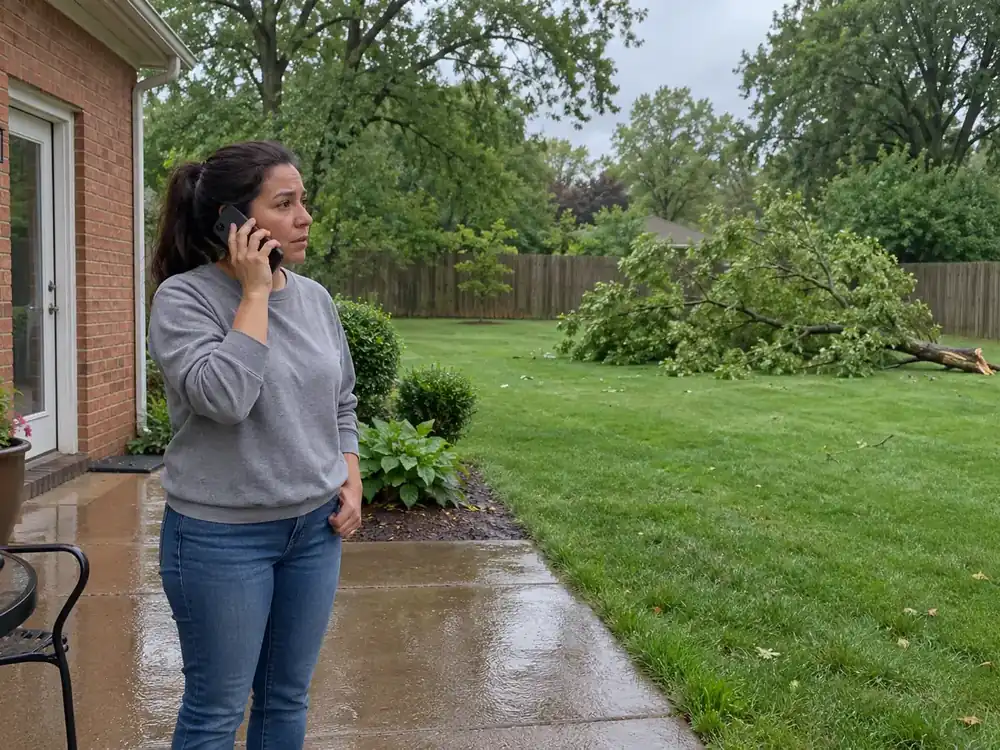
Keep people, pets, and vehicles clear of the affected tree while you call. Describe what you can already see: a broken branch, a change in lean, a bare crown, or a stump in the lawn. Share your town and street, whether the property is a home or business, and what stands near the tree. A roof, fence, driveway, or wire helps explain the situation. You don't need measurements or photographs to start the call.
Describe Access Without Approaching Damage
Avoid going beneath a questionable limb to inspect a gate or path. Explain the access you know about, such as a fenced backyard, shared drive, or paved courtyard. Say whether the tree is beside the street or close to a property boundary. You aren't expected to identify a species or diagnose the damage. The call gets the practical details to the tree professional who will assess the work.
Let Your Technician Examine the Tree
Keep outside the area being assessed while your technician looks at the trunk, branches, and surroundings. The assessment connects the visible problem with a proposed job: pruning selected limbs, removing the tree, grinding a stump, or handling storm debris. Nearby buildings, overhead lines, ground conditions, and access all shape the method. If the tree is on a boundary or near public land, those details belong in the discussion about permission before work.
Agree on the Scope and Finish
Leave damaged branches undisturbed while the work plan is discussed. One of our local tree service partners will explain the job's scope, safety arrangements, and price before work begins. Discuss whether wood will be hauled away or kept, whether stump grinding is included, and how chips will be handled. A tree removal and a finished planting area are different scopes. Ask what the site will look like at completion and which parts of your request are included.
Stay Clear While Arrangements Are Made
Treat any sagging or downed wire as live and remain well away from the tree and anything the wire touches. Call the utility about electrical hazards, or 911 for immediate danger. You may take pictures from a safe location, but leave ladders, tools, and damaged wood alone. Required permissions and underground utility planning are addressed before the relevant work. Call about the tree now; your first conversation doesn't depend on finishing research or moving debris.
Keep the Work Area Empty Through Cleanup
Keep children, pets, and parked cars outside the agreed work zone until your technician says the area is ready to use. The job follows the agreed plan, including the branch or tree work and the specified debris handling. At the final walkthrough, discuss retained logs, remaining chips, and any stump work. Raise questions about the finish while your technician reviews the completed scope. For the services available, visit tree services; call when you want to discuss the tree on your property.