
The quick answer
- Keep people and pets back because flying chips and buried utilities require safety planning around the stump.
- Stump width, wood condition, surface roots and the requested grinding depth determine the amount of material processed.
- Gate access, the number of stumps, hauling grindings and combining work with tree removal affect the overall scope.
Stump Size, Access and Cleanup Shape the Work
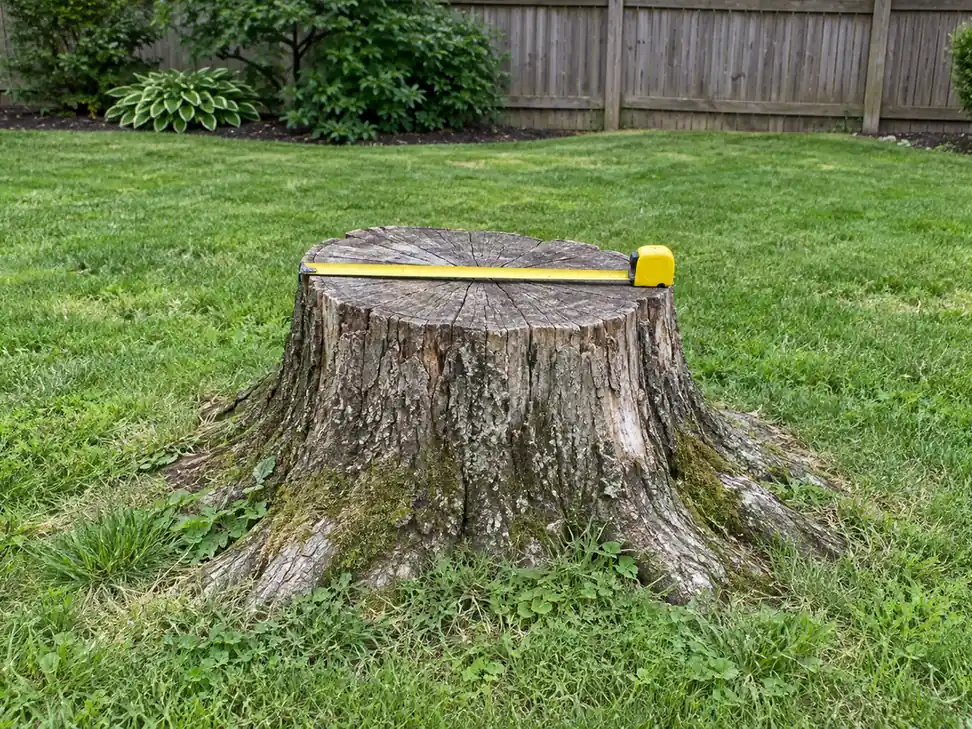
Keep people and pets away from stump grinding because the machine throws chips. Local stump removal cost depends on what needs to come out and how equipment reaches it. Call to discuss the stump and your plans for the space; your technician can define the work without asking you to uncover roots or dig around it.
Utility locating comes ahead of grinding
Leave the soil around the stump undisturbed until buried utilities have been addressed. In Illinois, JULIE's homeowner FAQs explain that 811 notification and member utility locating are free, and that the person doing the excavation must submit the request. In Missouri, Missouri 811, the state's one-call service, also offers a free locate request process.
Public utility marking does not cover every private line. Missouri 811's private-line guidance distinguishes utility-owned lines from customer-owned lines, such as electricity feeding a detached garage. JULIE makes the same distinction in Illinois. Discuss known private lines during the service call so locating needs are included in planning before grinding begins.
Stay away from a leaning tree or overhead broken limb near the stump. If a wire is down or sagging, treat it as live and call Ameren Illinois in Illinois, Ameren Missouri in Missouri, or 911. Ameren advises keeping clear of lines and anything touching them.
Width and wood condition determine the cutting work
Keep your distance from unstable wood; your technician handles the measurements. A wider stump generally means more material to grind. The wood's hardness, decay and time since removal also affect the work. An old stump is not necessarily soft throughout, and a small visible top can hide a broad base.
A stump grinding price chart cannot describe every yard. The factors below help explain why two apparently similar stumps can involve different tasks.
| Factor | Effect on the planned work |
|---|---|
| Width at the base | Sets the main area that needs grinding |
| Wood condition | Changes how readily the material breaks down |
| Multiple stumps | Adds cutting while allowing shared visit setup |
| Surface roots | Extends work beyond the central stump |
| Grinding depth | Changes material volume and the intended finish |
| Narrow access | Limits which machine can reach the stump |
Depth and access depend on the finished space
Stay outside the machine's operating area while the work is underway. Grinding reduces the stump into chips below the agreed surface level, while full removal excavates the stump and major roots. Grinding does not extract the entire root system.
Tell your technician whether the area is intended for lawn, another planting or construction. The desired use affects depth and whether grinding suits the project. Gate width, steps, slopes and the route across the yard also affect equipment access. Call with whatever you know; there is no need to enter an unsafe area to measure a gate.
Debris handling changes the final scope
Keep children away from loose grindings and uneven ground after the machine stops. Stump grinding prices depend partly on whether chips are left, raked back or hauled away. Soil, grading and lawn restoration should be named separately when included. A pile of grindings is a different finish from a space prepared for new turf.
Ask about combining stump grinding with a planned removal. Sharing a visit changes setup and hauling needs, though each stump still requires its own assessment. One of our local tree service partners will set out the grinding scope, cleanup and price with you before the job starts.