
Safety first · Collinsville, Illinois
Dead and Hazardous Tree Removal in Collinsville, IL
Give dead branches and a changing lean plenty of space. Our local tree service professionals remove dead and hazardous trees in Collinsville; call about bare limbs, a split trunk or lifted roots, and your technician will assess the tree and explain the next steps.
- Calls answered 24/7
- Dead trees
- Serving Collinsville and nearby
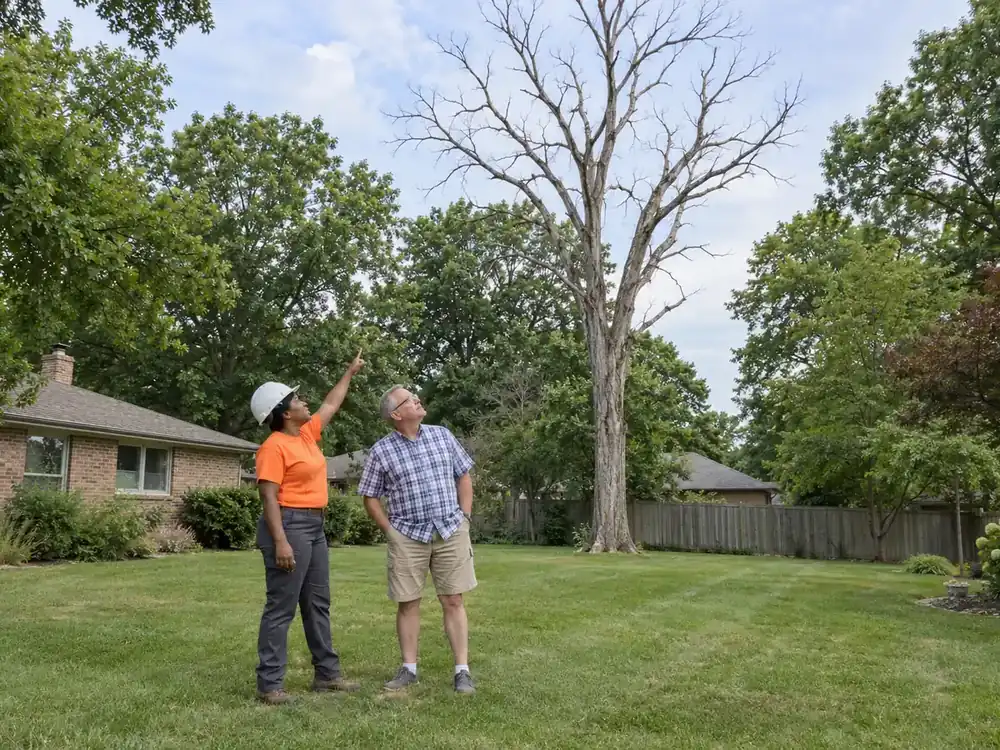
Dead Tree Removal Safety Tips Before Help Arrives
Safety first
Give a dead tree room, and call without approaching its trunk for a closer look.
- The limb: Keep parked cars, paths and play spaces clear beneath dead branches; Illinois Extension explains that dead ash becomes brittle. Take any photos from outside the affected area.
- The line: Report a dead tree touching wires to the utility and leave electrical clearance to them. Treat fallen or sagging wires as live; Ameren says to avoid downed lines and report them immediately.
- The lean: Stay away from lifting roots or an opening trunk crack. Never climb a dead tree yourself; climbing and removal require trained workers, suitable equipment and an assessment of the wood.
Signs a Dead or Damaged Tree Needs Assessment
- Keep the space beneath a tree clear when its branches stay bare while nearby trees have summer leaves.
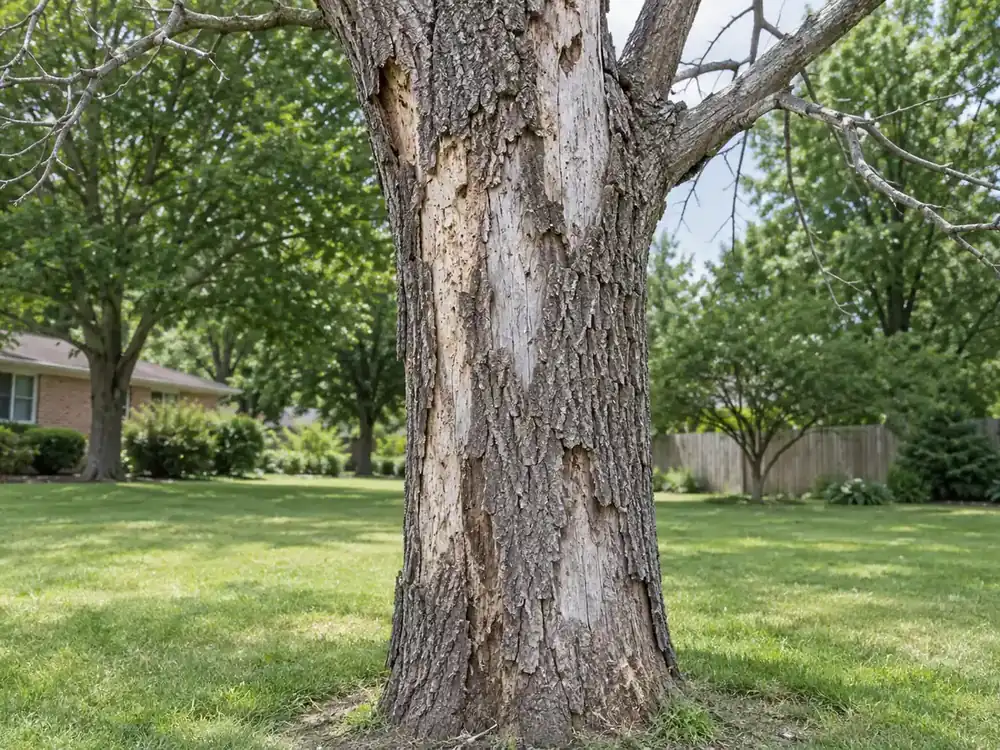
- Avoid walking under limbs when large sheets of bark are falling away from the trunk.
- View mushrooms or shelf fungus at the base from a distance, and call about the change.
- Stay outside the canopy if an ash has widespread pale patches where woodpeckers have stripped bark.
- Keep people off the path beside a trunk with a visible split or a newly changed lean.
- Leave the ground around raised roots undisturbed and describe the lifting soil during your call.
Dead Tree Removal Services for Collinsville Properties
- Dead and dying trees: Leave the area beneath bare or declining limbs unused and call for assessment. Your technician checks whether the whole tree needs removal and plans how to manage the wood around nearby buildings.
- Declining ash: Keep away from dead ash branches. Removal covers ash trees killed by emerald ash borer, with the condition of the trunk and limbs guiding equipment choices.
- Cavities and splits: Avoid a trunk with a large opening, a split or fungus at its base. The inspection considers those visible defects when deciding how to take the tree apart.
- Unstable roots: Stay clear of a leaning tree with lifting roots. Your technician plans removal around the tree's support, access and the space available for handling sections.
- Dead branches: Keep the house entrance, drive or play area beneath damaged wood unused. Removing dead wood from trees may address individual limbs when assessment shows that the remaining tree can stay; hauling and cleanup are agreed as part of the scope.
The Dead and Hazardous Tree Removal Process
- Stay outside the tree's reach and call to describe the concern. Share the location of bare branches, bark loss or a changed lean without going closer to inspect.
- Your technician checks the trunk, root area and canopy from suitable positions. Nearby buildings, fences, wires and equipment access help determine the removal plan.
- You receive an explanation of the proposed scope and price before authorizing work. Discuss which trees or limbs are included, how wood is handled and whether stump work is separate.
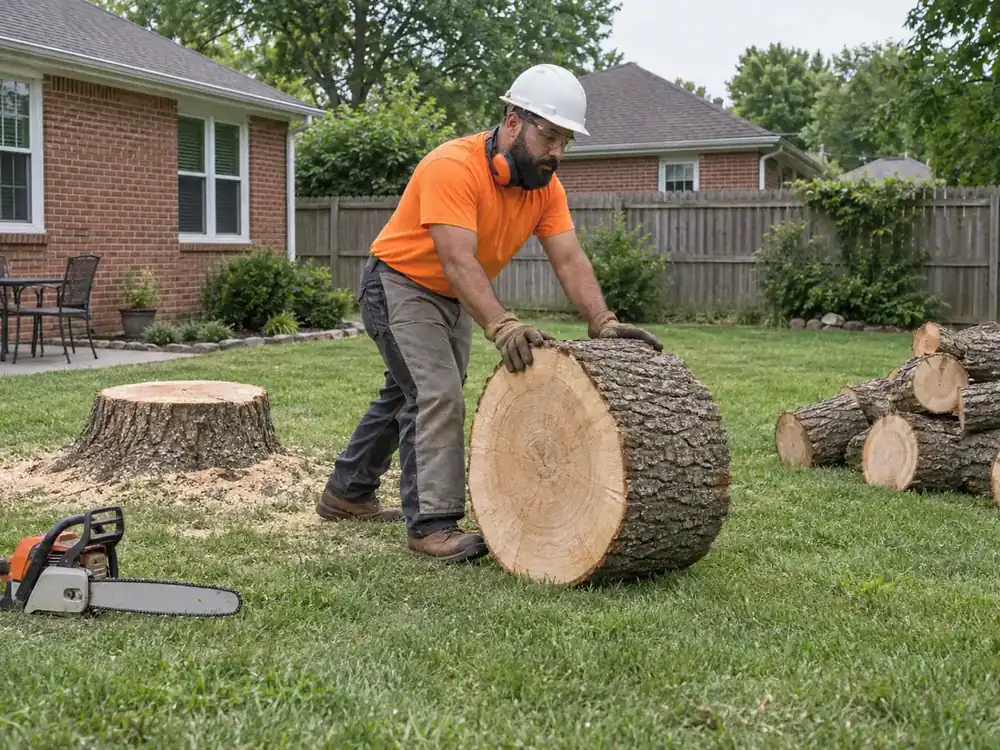
- Removal follows the agreed plan with people kept out of the work area. The job finishes with the specified brush clearing and hauling, followed by a check of what remains.
Dead Tree Removal Cost Factors in Collinsville
Stay back from unstable wood while your technician assesses the work; tree condition affects the removal method.
- Height, trunk diameter and the quantity of wood to handle.
- Decayed sections and the support available for controlled removal.
- Nearby roofs, overhead wires, fences and other obstacles.
- Equipment access and whether branches require lowering with ropes.
- Brush disposal, log hauling and any storm or after-hours work.
Your approval comes before cutting: one of our local tree service partners sets out the work involved and the price attached to it. The tree removal cost page explains how site conditions shape the job. Call to talk through the tree's location and the cleanup you need.
Dead Ash and Street Trees Around St. Louis
Keep clear of dead ash limbs in Illinois; Illinois Extension reports that emerald ash borer has spread throughout the state and dead ash becomes brittle. Mention bark loss and bare branches during your call rather than inspecting them up close.
Give declining ash the same space in Missouri: the Missouri Department of Conservation documents emerald ash borer in the state, and its ash safety advice describes infested trees as brittle. Your technician assesses the tree's condition and removal needs.
Stay away from damaged roadside trees; in the City of St. Louis, Missouri, the Forestry Division plants, removes and maintains street trees on public rights-of-way. Call about the concern and explain where the trunk stands so public-tree responsibility can be addressed as the work is planned.
Other Services for Tree Problems
Dead Tree Help Across the Service Area
Leave declining trees undisturbed and call about removal in Collinsville, Granite City, Fairview Heights or St. Louis, including dead limbs above buildings and damaged trunks beside paths.
Dead and Hazardous Tree Removal FAQs
Should dead trees be removed?
Dead trees near occupied areas, structures or regularly used paths need assessment for removal while people stay clear. The tree's location and condition determine the scope; dead branches alone may call for a different approach from a dead trunk. Call to describe what you see without walking underneath the canopy.
Can a dying tree be saved?
Some declining trees can remain after assessment, but dead wood cannot be restored to living growth. Keep clear of broken branches and arrange a tree health check when the cause of decline is uncertain. Your technician examines the tree and explains whether pruning, monitoring or removal fits its condition and location.
Do I need permission to remove a dead street tree?
In the City of St. Louis, the Forestry Division handles removal of street trees on public rights-of-way, so a dead street tree should be reported rather than treated as a private yard removal. Stay clear and call about the tree's position. Public-tree responsibility needs to be settled before cutting, and the St. Louis rule does not establish requirements for Illinois properties.
What does a dead tree removal service include?
The agreed service covers taking down the specified tree or limbs and handling the resulting wood and brush. Keep the surrounding area clear while your technician assesses the site. Discuss hauling, retained logs and stump work during the scope review so the finished condition of the yard is clear before work begins.
When is emergency dead tree removal needed?
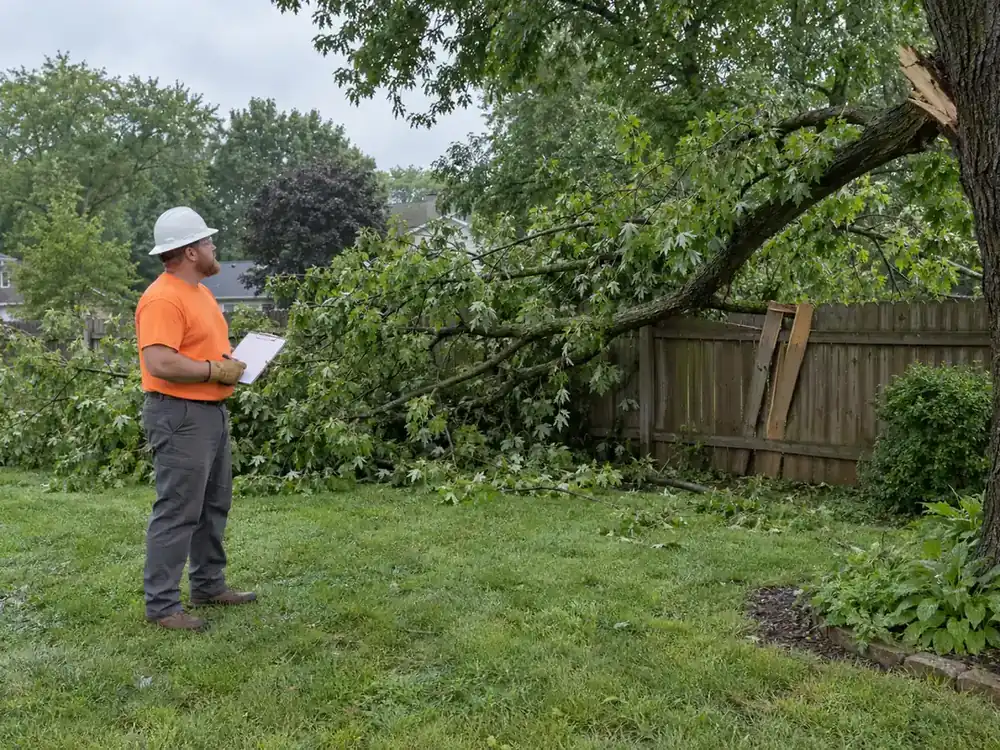
A dead tree that has newly split, shifted at the roots or dropped a limb onto a structure needs urgent attention while everyone stays away. Call about the change and describe any blocked entrance from a safe spot. Never approach the trunk to test its movement or pull at a hanging branch.
Leave dead limbs and shifting trunks alone, keep the surrounding space clear, and call to discuss removal with your technician.
Call (618) 328-6660