
Safety first · Collinsville, Illinois
Tree Health Checks in Collinsville, IL
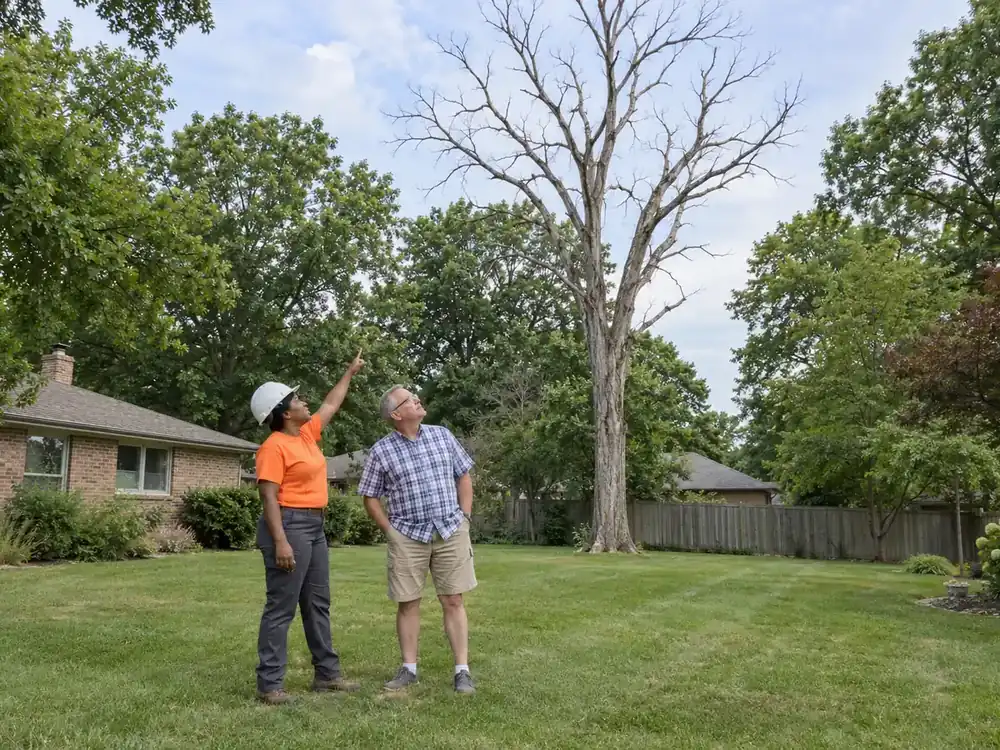
Stay back from cracked limbs and a changing lean; our local tree service professionals assess tree condition in Collinsville and explain care options. Call about thinning leaves, damaged bark or changes around the roots, and describe what you've noticed from a safe distance.
- Calls answered 24/7
- Tree health checks
- Serving Collinsville and nearby
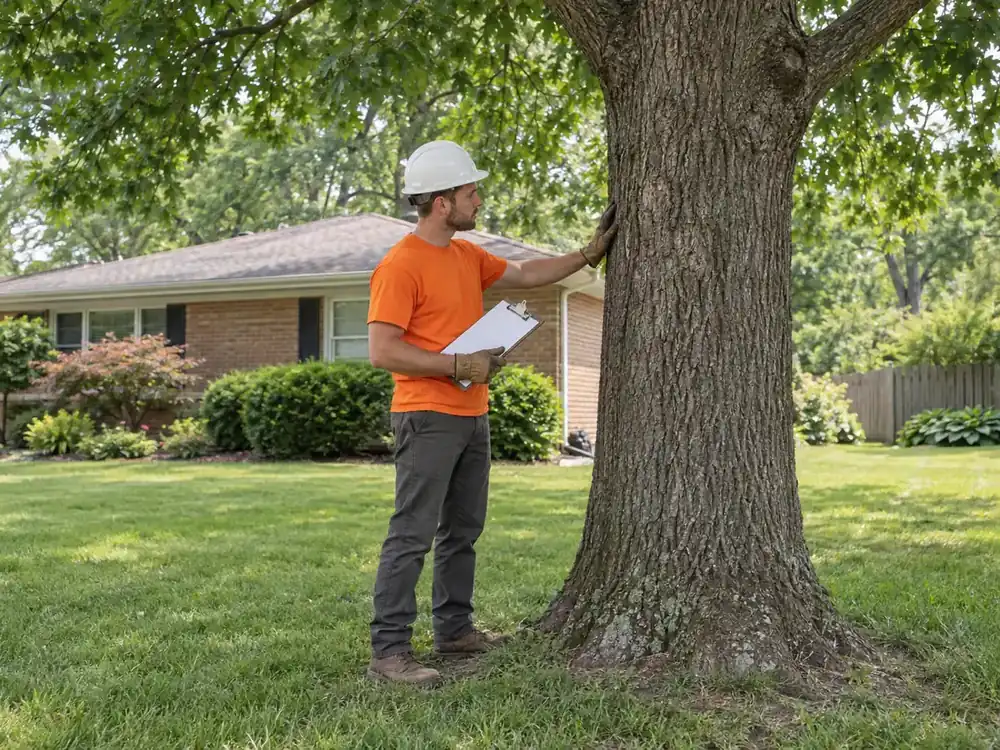
Tree Health Check Safety Tips Before Help Arrives
Safety first
Look only from the ground at a safe distance, and call about changes without approaching damaged branches.
- The limb: Don't stand under dead or hanging limbs to study the leaves, and never climb to inspect a tree. OSHA's tree-care guidance calls for keeping nonessential workers away from tree work drop zones.
- The line: Regard any sagging or downed wire as live and stay well away from the wire and nearby growth. Report the wire to Ameren Illinois or Ameren Missouri, or call 911.
- The lean: Keep people, pets and parked cars away from a tree whose lean has changed. Describe the change during your call; photographs are useful only when taken from a safe place without entering the area beneath the tree.
Signs You Need a Tree Health Check
- A lean has changed or soil has lifted near the trunk; keep people, pets and cars away and call.
- Leaves drop early or the crown looks thinner than surrounding trees; observe from beyond damaged branches.
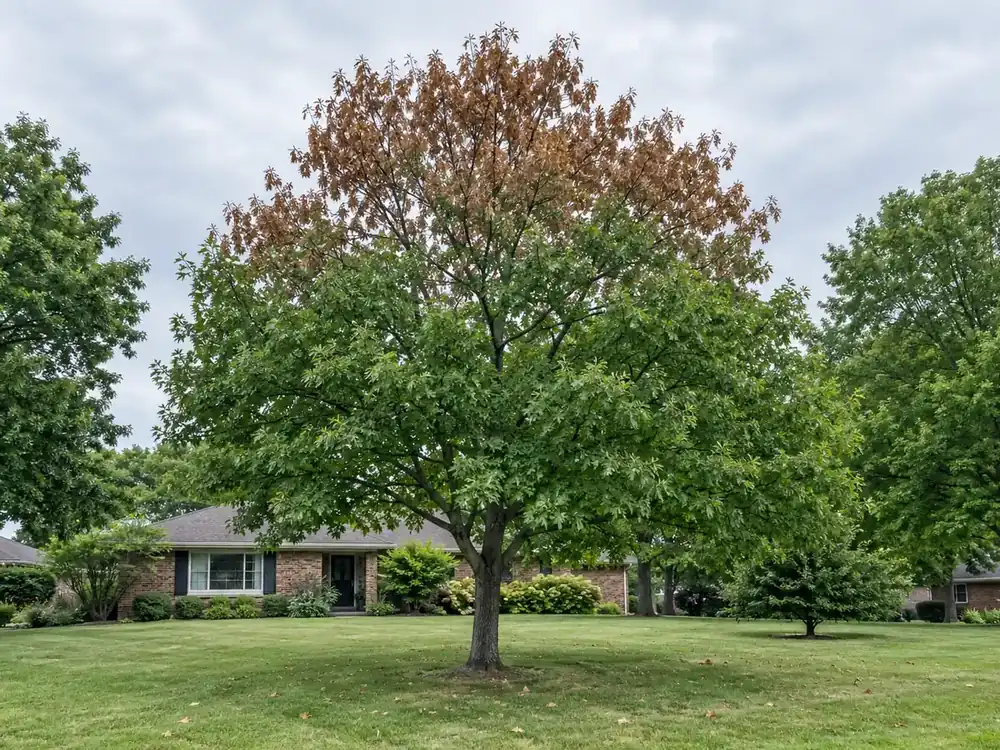
- An oak's upper leaves wilt or turn brown while lower leaves remain green; don't stand underneath to inspect.
- Bark has split, a cavity is visible or fungus appears near the base; leave the area undisturbed.
- Woodpeckers repeatedly work an ash tree and pale bark patches appear; describe the visible changes without approaching dead limbs.
- Recent digging or driveway work has disturbed roots; mention the work during your call from a safe position.
What Tree Health Checks Cover
Remain beyond damaged limbs while your technician examines the tree and explains what its visible condition means.
- Leaves and crown: The check considers leaf color, thinning, dead branches and where symptoms appear. The discussion includes when you first noticed changes and whether nearby trees look different.
- Bark, trunk and roots: Your technician examines accessible bark, cracks, cavities and the root flare where the trunk meets the ground. Recent excavation and changes to nearby surfaces help explain the setting.
- Ash concerns: Illinois Extension describes woodpecker damage and distinctive exit holes among emerald ash borer signs. The check considers those observations without treating a single symptom as a complete diagnosis.
- Oak concerns: Missouri's MDC describes upper-crown wilting and browning among red oak wilt symptoms. Your technician explains the findings and whether further diagnosis is needed.
- Care choices: Options include pruning selected dead wood, considering cables and braces for a weak fork, monitoring changes or removal. Call to discuss the tree; any recommended work receives its own clear scope.
Our Tree Health Check Process
- Give a leaning tree or damaged branch plenty of space and call to describe the symptoms, the tree's location and any recent yard work.
- Your technician checks the visible crown, trunk and root area, considers nearby structures and wires, and plans a safe assessment.
- The assessment scope and price are explained before it begins; recommended pruning, support or removal is discussed separately so the work is clear.
- Findings and care options are explained in plain words, with any agreed follow-up work and its cleanup requirements set out before that work starts.
What Affects Tree Health Check Costs in Collinsville
Avoid approaching a weak fork or dead branch; safe access and the assessment's extent influence the cost.
- The number and size of trees, and how many separate symptoms need examination.
- Nearby roofs or wires, restricted access and any need for equipment to examine the tree safely.
- Whether the assessment leads to separately agreed pruning, including controlled lowering of branches with ropes.
- Cleanup and hauling for follow-up work, rather than observation alone.
- Storm-related conditions or after-hours work included in the request.
Before the assessment starts, one of our local tree service partners sets out the scope and price with you. The tree trimming cost page explains factors that matter when pruning is recommended; call now to discuss the symptoms.
Tree Health Concerns in Illinois and Missouri
Stay clear of dead ash branches; in Illinois, Extension lists increased woodpecker activity, lighter exposed bark and D-shaped exit holes as emerald ash borer signs. In Missouri, MDC identifies D-shaped exit holes and winding tunnels beneath ash bark; don't peel bark to look for them.
View a wilting oak from beyond the area beneath its branches. Illinois Extension describes oak wilt leaves becoming dull green, then bronze or tan along their edges. In Missouri, MDC describes early-summer upper-crown browning and wilting in red oaks and warns that other disorders can look similar. Call to describe the tree's changes rather than choosing a diagnosis from its leaves alone.
Tree Services After the Assessment
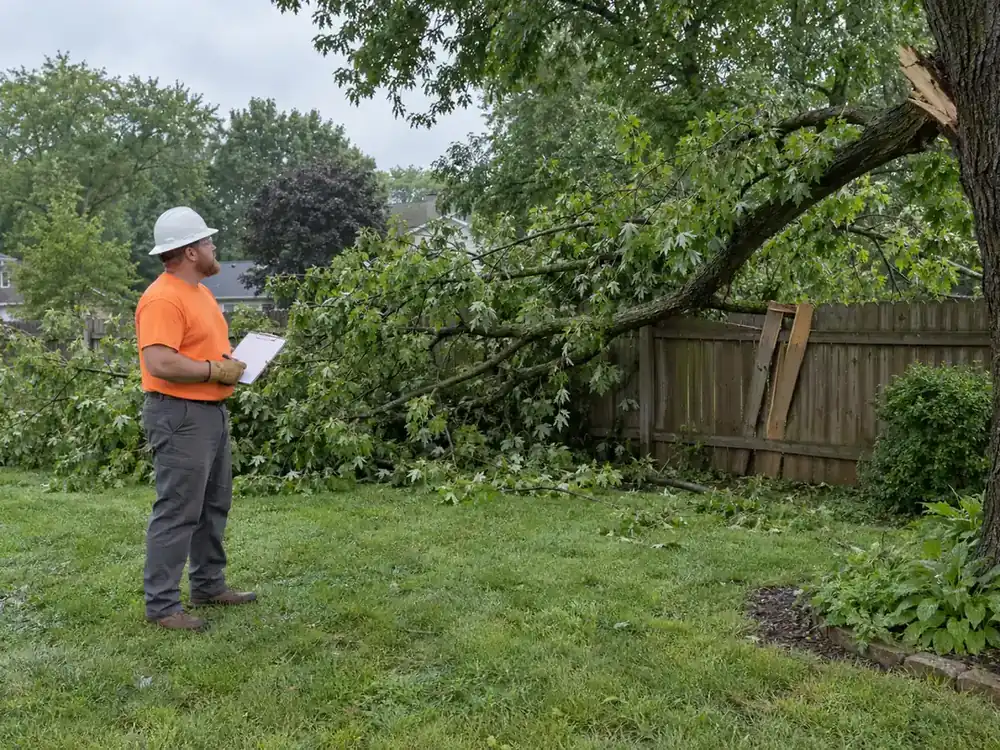
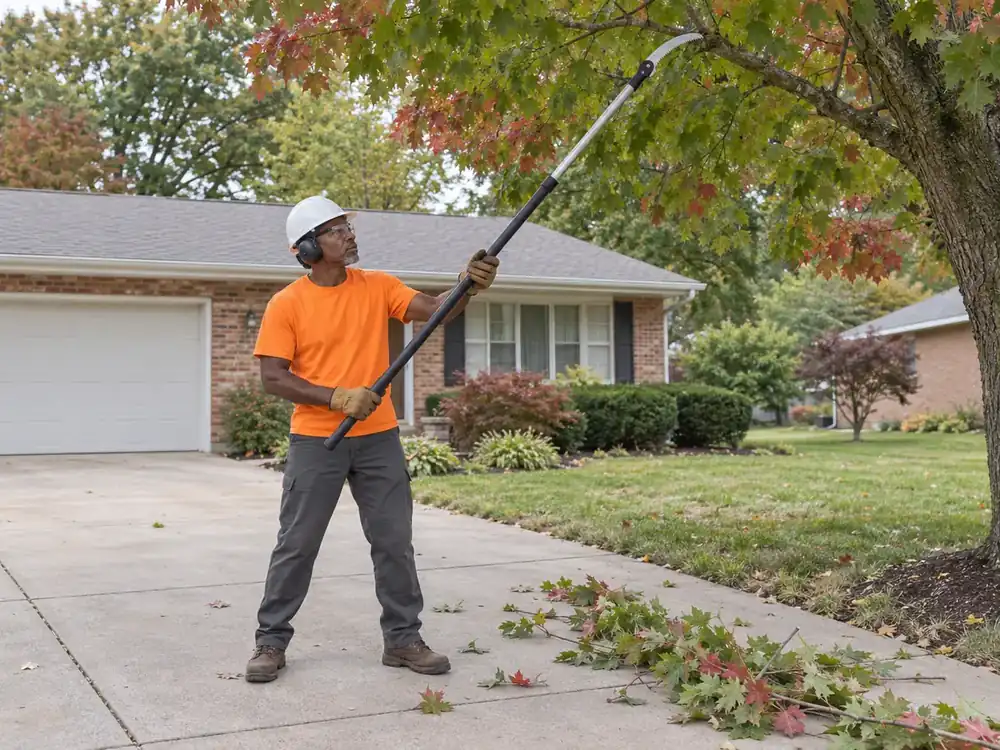
Tree Health Checks Across the Service Area
Keep a safe viewing distance and call about tree health checks in Collinsville, Belleville, Troy or St. Louis; your technician examines the symptoms and discusses the next step.
Tree Health Checks FAQs
Can a dying tree be saved?
Some declining trees have care options, but a health check needs to establish the tree's condition before recommending a course of action. Stay away from dead branches and call about the changes you've noticed. Your technician discusses monitoring, pruning, structural support or removal according to the findings, without promising recovery.
What does a tree health check examine?
A tree health check examines visible leaves, branches, bark, trunk and the accessible root area, along with nearby conditions that affect the tree. Observe from a distance instead of standing beneath damaged wood. During the call, share when symptoms began and mention recent digging, construction or changes to the ground.
Does a tree consultation include an arborist report?
A formal written report needs to be discussed separately from a routine health check. Keep beyond the reach of damaged limbs and call to explain the document's purpose and requested contents. Your technician explains the assessment scope and the written findings included, so documentation expectations are clear before work begins.
Should I call about a tree whose lean has changed?
Yes, a changed lean is a reason to call for an assessment while keeping people, pets and vehicles clear. Don't approach the trunk to test whether it moves or walk around exposed roots for a closer look. Describe the direction of the change and nearby structures from a safe location.
Does a health check mean the tree must be removed?
A health check does not automatically lead to removal; the findings determine which options deserve consideration. Keep away from cracked or hanging limbs while the tree is assessed. Your technician explains whether watching for changes, pruning, considering support or removing the tree fits its condition and surroundings, then discusses any proposed work.
Stay clear of the cracked limb or changing lean and call to discuss a tree health check for the symptoms you've noticed.
Call (618) 328-6660